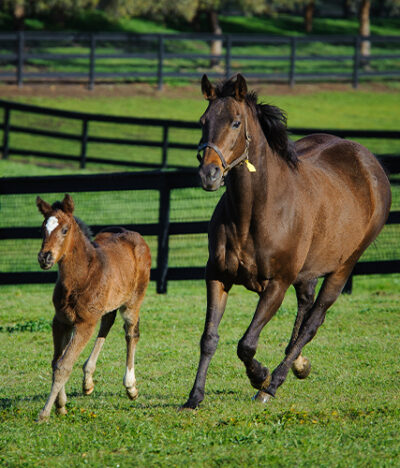
Since it first emerged in Central Kentucky in 2021, Equine Rotavirus B has shown itself to be a major health threat to very young foals.
- The virus causes severe diarrhea in neonatal foals as young as 24 hours old.
- Rotavirus is highly contagious, challenging the strictest biosecurity protocols.
- Some farms have had up to 75% of the foal crop affected, with many foals being referred for intensive care to equine hospitals or intensive round-the-clock care on the farm
- Research conducted at the University of Kentucky and in a clinical field trial conducted by Dr. Emma Adam with over 900 pregnant mares indicated that this vaccine seems to be very safe to use
Research has shown that mares vaccinated with the traditional Rotavirus A vaccine produce antibodies that cannot protect against Rotavirus B. Like the Rotavirus A vaccine, this Rotavirus B vaccine, delivered during pregnancy at months 8, 9, and 10 of gestation, has been shown to be highly effective at imparting colostral immunity to foals born to vaccinated dams.